How to Remove Oil Stains from an Asphalt Driveway: A Minnesota Homeowner's Guide
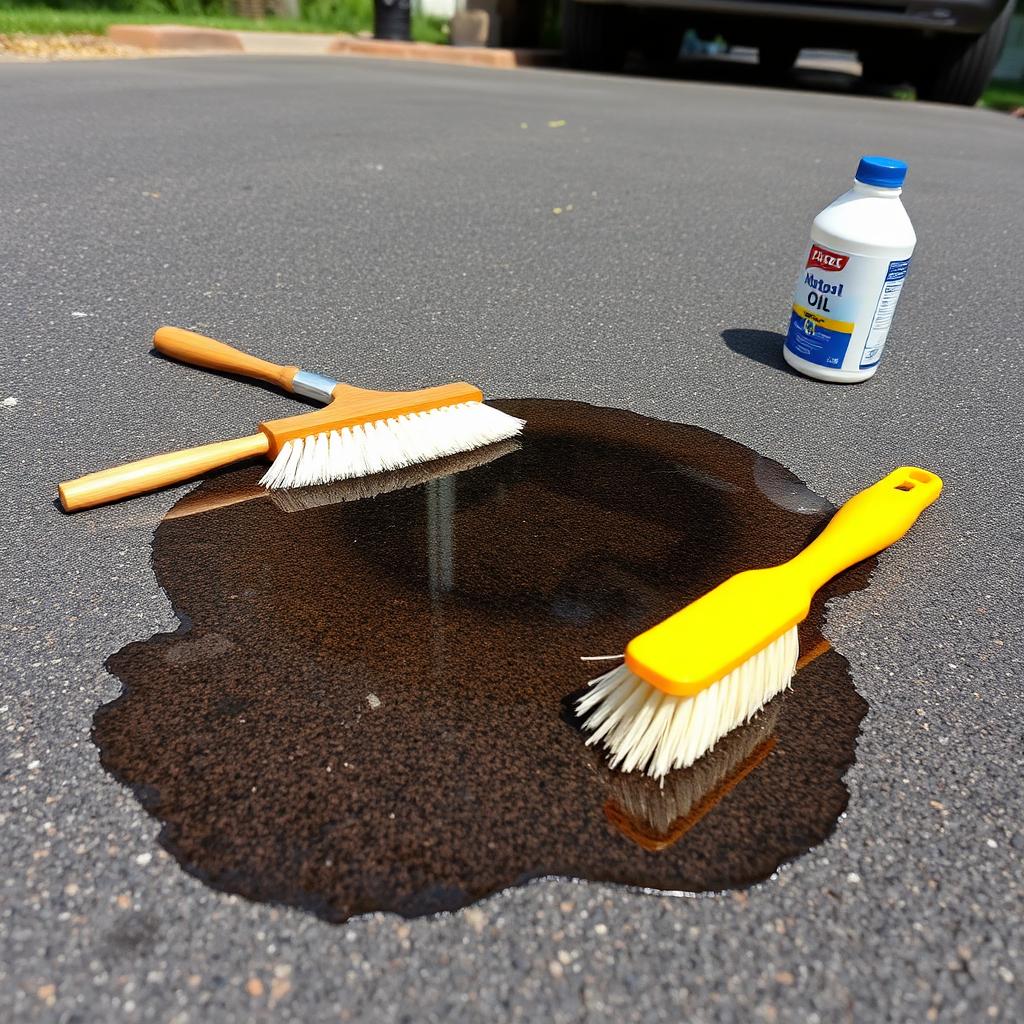
Oil stains aren't just ugly. On an asphalt driveway they're actively eating the surface — petroleum dissolves the petroleum‑based binder that holds your driveway together. Catch a fresh spill and you can usually save the asphalt entirely. Wait six months and you're looking at a soft spot that won't take sealcoat. Here's the method we use on driveways across the Watertown area, broken down by how old the stain is.
The short answer
Fresh spills (under 24 hours): absorb with cat litter or sawdust, then scrub with dish soap and hot water. Set‑in stains: apply a concrete/asphalt‑safe degreaser, dwell 15–30 minutes, scrub, rinse. Old, soaked‑in stains: poultice method (degreaser + absorbent paste), let dry overnight, sweep off, repeat if needed. Then sealcoat the driveway once it's fully dry.
Why oil stains matter on asphalt
Asphalt pavement is aggregate held together by a petroleum binder. When motor oil, hydraulic fluid, or gasoline soaks in, it dissolves that binder — the surface softens, loses aggregate, and eventually pits. You can't sealcoat over a soft, oil‑saturated spot; the sealant won't bond and you'll see the stain bleed through within weeks.
Used motor oil is also a regulated waste. The Minnesota Pollution Control Agency requires used oil and oil‑soaked absorbents to be disposed of at a certified collection site — not in the trash or storm drain.
Fresh spills: the 24‑hour method
What you need:
- Clay cat litter, sawdust, or cornstarch (any absorbent)
- Stiff‑bristle nylon brush (not a wire brush — it shreds asphalt)
- Liquid dish soap (Dawn works)
- Bucket of hot water
- Garden hose
Steps:
- Cover the spill completely with absorbent and let it sit 1–2 hours. Don't grind it in.
- Sweep up the absorbent and bag it for a hazardous‑waste drop‑off.
- Pour a few drops of dish soap on the stain, add hot water, and scrub in circles with the nylon brush.
- Rinse with the garden hose, working the water toward grass or a drain — not the street.
- Repeat once if a shadow remains. Most fresh spills come up clean on the first pass.
Set‑in stains: the degreaser method
If the stain has been there a few days to a few weeks, dish soap isn't going to cut it. You need a degreaser rated for asphalt.
- Sweep the area clean and let it dry.
- Apply a concrete/asphalt‑safe degreaser per label directions. Look for "safe for asphalt" on the label — strong acid or solvent products will damage the surface.
- Dwell 15–30 minutes. Don't let it dry out — re‑wet if needed.
- Scrub with the nylon brush.
- Rinse thoroughly. Capture the runoff if you can — it's contaminated.
- Re‑apply once for stubborn stains.
Old, soaked‑in stains: the poultice method
For stains older than a few months, the oil is now inside the asphalt, not just on top. You have to pull it back out.
- Mix degreaser with an absorbent powder (diatomaceous earth, talc, or even baking soda) into a peanut‑butter‑thick paste.
- Trowel the paste over the stain about ¼" thick, extending an inch past the visible edge.
- Cover loosely with plastic and tape the edges. Let it dwell overnight.
- Uncover and let the paste dry completely (another day if needed).
- Sweep up the dried paste — it should pull the oil out with it.
- Rinse the area, evaluate, and repeat once or twice if the stain is large or deep.
What not to use
- Gasoline, kerosene, or paint thinner. These dissolve the asphalt binder along with the oil. You'll trade an oil stain for a soft spot.
- Bleach or muriatic acid. Won't lift oil, will damage the surface and any sealcoat.
- Wire brushes or metal scrapers. They tear loose aggregate. Stick with stiff nylon.
- A pressure washer above 1,500 PSI. Anything stronger blasts aggregate out of the surface, especially around the stain where the binder is already weakened.
Sealcoating after stain removal
Once the stain is out and the area is fully dry, the next step is almost always sealcoat. Sealing locks any residual stain shadow under the surface, restores a uniform appearance, and waterproofs the spot that just took a beating from degreaser. Timing:
- Clean the stain thoroughly using one of the methods above.
- Allow the area to dry for at least 48 hours — longer in humid weather.
- If you're sealing the whole driveway, schedule during the normal Minnesota sealcoating window (July through early September).
- Apply two thin coats. A spot‑seal will be visible — full‑driveway sealcoat blends the repair invisibly.
For an overall maintenance rhythm so stains don't pile up, see our Minnesota asphalt driveway maintenance calendar.
When to call a professional
- The stain is larger than about 2 feet across.
- The asphalt under the stain is visibly soft, spongy, or pitted — that's binder failure, not a surface stain.
- You've poulticed twice and it's still bleeding through.
- You're planning a sealcoat this season anyway — a pro can clean, treat with an oil‑spot primer, and seal in one visit.
FAQs
Will sealcoat cover an old oil stain?
Sealcoat alone usually won't. Oil that's soaked in will bleed through the new sealant within a few weeks. The fix is to clean the stain first, prime it with an oil‑spot primer, then sealcoat — that combination locks the stain under the surface.
Will the oil stain come back after I clean it?
A surface stain that's truly cleaned won't reappear. A deep stain that wasn't fully poulticed can wick back to the surface in hot weather as the asphalt softens. If you see a shadow returning the first hot week of July, that's your sign to poultice once more or have it primed and sealed.
How long after cleaning should I sealcoat?
At least 48 hours of dry weather, longer if the cleaning used a lot of water or degreaser. The surface needs to be fully dry top‑to‑base so the sealant bonds. In humid stretches, wait three to four days.
Does kitty litter actually work?
For fresh spills, yes — clay litter is genuinely absorbent and is what most professional spill kits use. It only works while the oil is still liquid on the surface; once it soaks in, you've moved into degreaser or poultice territory.
Can I use a pressure washer to remove the stain?
Light pressure (under 1,500 PSI) with a fan tip and a degreaser can help. Heavy pressure with a narrow tip will strip aggregate out of the surface and make the damage permanent. If you wouldn't aim it at your siding, don't aim it at your driveway.
Stain out, sealcoat next.
Prater Companies is locally owned, based in Watertown, MN, and serves Mayer, Waconia, Delano, Howard Lake, and the rest of the west metro. If you'd rather have us handle the cleanup, oil‑spot priming, and full sealcoat in one visit, call 763‑234‑7341 or request a free quote. See current Prater Companies promotions before you schedule. If it's a fresh driveway, read our first‑year new asphalt care guide too.