Asphalt Patching & Pothole Repair: What Actually Lasts Through a Minnesota Winter
Potholes are practically a Minnesota state symbol. Every spring, driveways and parking lots around Watertown, Mayer, Waconia, and Delano open up new craters after a winter of freeze‑thaw cycles, heavy snow, and road salt. The hard part isn't filling the hole — it's making the patch last. Here's what actually holds up through a real MN winter, and what just turns into a new pothole by next April.
The short answer
For a patch that survives Minnesota freeze‑thaw, you want a full‑depth hot‑mix asphalt repair with clean, square‑cut edges, a properly compacted base, and a tack coat to bond the patch to the surrounding pavement. Cold‑patch from a hardware store is a temporary winter fix only — it will not hold long term.
Why MN potholes keep coming back
A pothole is almost never a surface problem — it's a base failure that finally broke through to the top. The sequence:
- Water enters through a hairline crack you barely noticed.
- Freezes overnight, expands ~9%, and lifts the asphalt from below.
- Thaws, leaving a void under the surface.
- A vehicle drives over the weakened spot and breaks it through.
- Each freeze‑thaw cycle makes the hole bigger.
The Twin Cities west metro sees dozens of freeze‑thaw cycles each year, which is why patching here has to address the base — not just the hole you can see.
Patching methods: what actually works in Minnesota
1. Cold‑patch (throw‑and‑go)
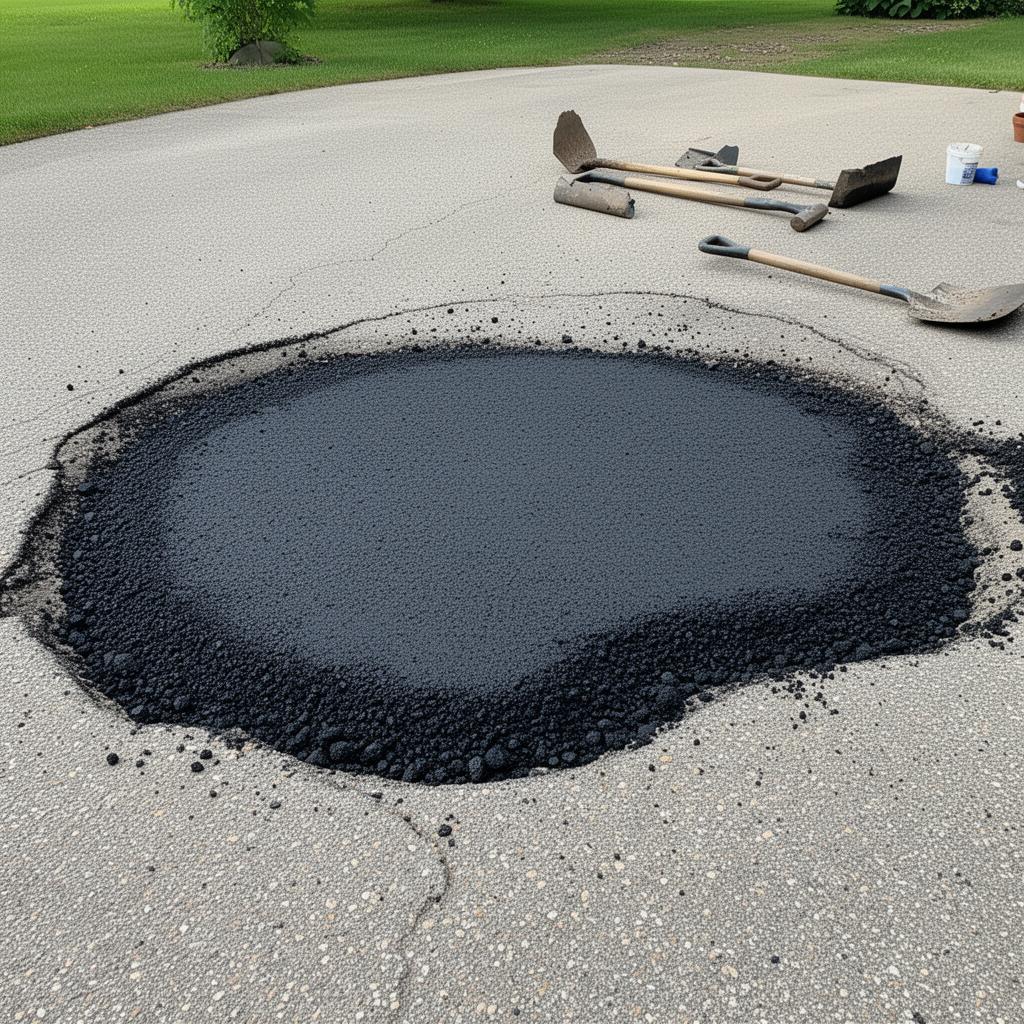
A bagged asphalt mix you shovel into the hole and tamp down. Useful for emergency winter repairs when hot mix isn't available, but it stays flexible, sheds aggregate, and typically fails within a season. Treat it as a band‑aid, not a fix.
2. Hot‑mix surface patch
Hot asphalt is shoveled into the hole and compacted. Better than cold patch, but if the failed base isn't excavated, the new patch will sink and crack within 1–2 winters.
3. Full‑depth hot‑mix patch (what we recommend)
The damaged section is saw‑cut into a clean rectangle, excavated all the way to solid base, the base is re‑compacted (and re‑graded if needed), a tack coat is applied to the vertical edges, and hot mix is placed and compacted in lifts. Done right, this patch can last as long as the surrounding pavement.
4. Infrared patching
A heater softens the existing asphalt around the failure so new material can be blended in, creating a seamless repair with no cold joint. Great for surface‑only failures and high‑visibility commercial lots; not a fix for base failure.
How to tell patching is the right call
Patching makes sense when:
- The failures are localized (a few discrete potholes, not lot‑wide).
- The surrounding pavement is structurally sound.
- You're within the useful life of the driveway or lot (under ~20 years for residential, under ~15 for commercial).
- Drainage is correct — water isn't pooling on the patch area.
If you're seeing widespread alligator cracking, sinking, or holes opening up across most of the surface, you're past patching and into resurfacing or replacement territory. Our guide on crack filling vs. driveway replacement walks through where that line is.
Patch first, then sealcoat
Sealcoating is the maintenance layer that keeps water out of the asphalt — but it can't fix structural damage. The right sequence is:
- Full‑depth patch any potholes.
- Hot‑pour crack fill anything wider than ⅛".
- Wait for new patches to cure (typically 30 days for hot mix).
- Apply two coats of commercial sealant.
- Re‑stripe if it's a parking lot.
Done together, this resets the surface and pushes replacement out by years. See how often we recommend the maintenance cycle in our post on how often to sealcoat a Minnesota driveway.
FAQs
Will the bag of cold‑patch from the hardware store actually work?
For a winter emergency or a short‑term plug before a real repair, yes — that's exactly what it's for. As a permanent fix in Minnesota, no. The aggregate sheds, the patch flexes under traffic, and water finds its way back in. Expect to redo it within a season.
How long does a hot‑mix asphalt patch last?
A properly done full‑depth hot‑mix patch can last 10+ years and often outlives the surrounding asphalt. Surface‑only patches without base repair typically last 1–3 winters before they need redoing.
Can you patch potholes in winter?
Hot‑mix patching needs above‑freezing temperatures and dry pavement to bond properly, so we schedule permanent patches from late spring through fall. For mid‑winter failures we can place a cold‑patch temporary and come back for a proper repair when conditions allow.
How long do new patches need to cure before sealcoating?
Allow a fresh hot‑mix patch at least 30 days to cure before sealing over it, so the oils in the asphalt can rise and evaporate. Sealing too early traps them and creates a soft spot.
Do you patch potholes on commercial parking lots?
Yes — we patch residential driveways and commercial lots across the west metro, and we can phase larger jobs so part of the lot stays open while we work. See our guide to parking lot sealcoating for Minnesota businesses for how we sequence patch + sealcoat + stripe in one mobilization.
Got a pothole? Get it looked at.
Prater Companies is locally owned and based in Watertown, MN. We'll come out, look at the failure, and tell you straight whether it needs a patch, a resurface, or full replacement — no upsell. Call 763‑234‑7341 or request a free on‑site assessment. You can also view current Prater Companies promotions before scheduling.