Parking Lot Seal Coating in Minnesota: A Property Manager's Guide
Quick answer: in Minnesota, most commercial parking lots should be seal coated every 2–3 years and re‑striped at the same time, with crack filling done annually. That rhythm — plus catching potholes early — is what stretches a lot from 15 years to 25+.
If you manage a retail center, office park, apartment complex, church, or industrial property anywhere from Watertown to the west metro, your parking lot is one of the most expensive assets on the site. It's also the first thing every customer, tenant, and employee touches. Here's how Prater Companies approaches commercial seal coating, and what to expect when you bring in a contractor.
Why Minnesota is brutal on commercial asphalt
Twin Cities west‑metro lots take a beating most of the country never sees: 150+ freeze‑thaw cycles per year, road salt tracked in by every vehicle, plow blades scraping the surface all winter, UV from long summer days, and oil drips from constant traffic. Each of those attacks the binder that holds the asphalt together. Seal coating is the protective layer that takes the hit instead of the pavement.
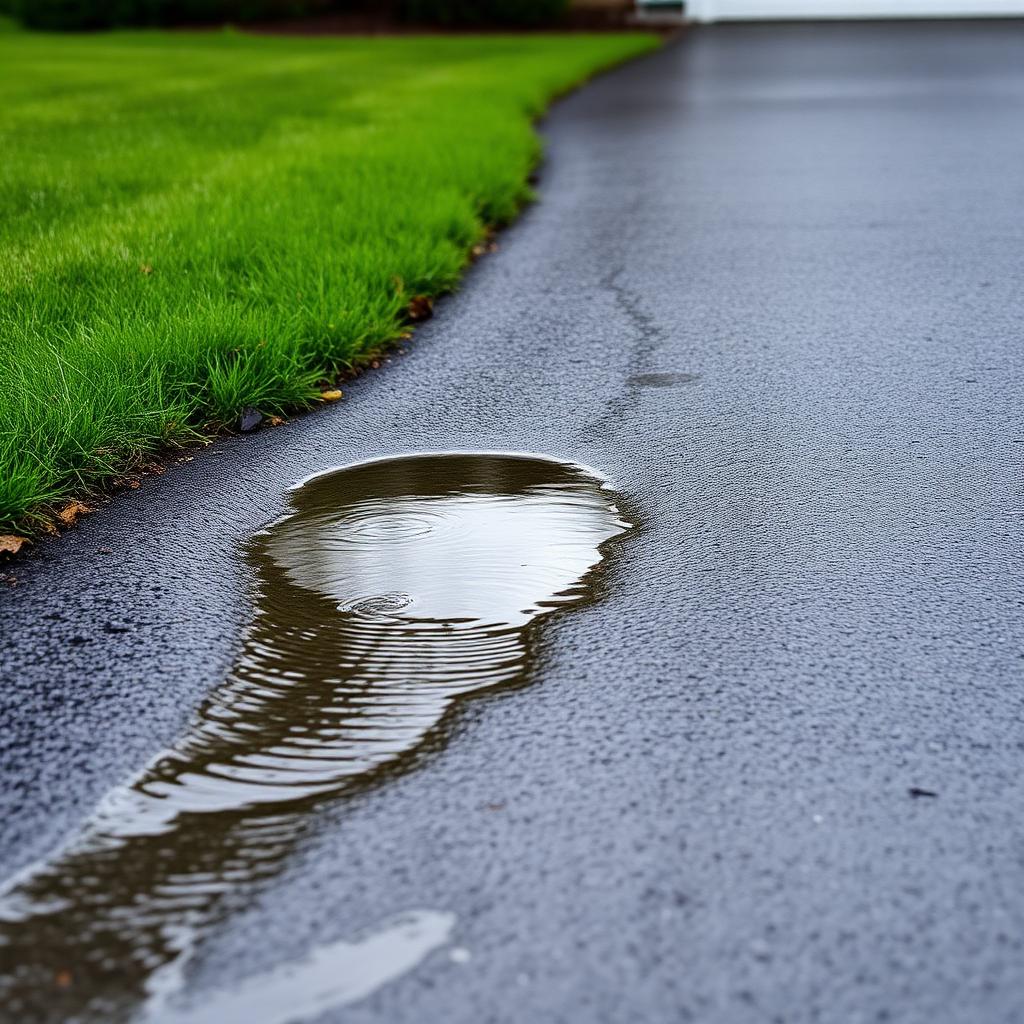
Skip it, and the asphalt dries out, cracks, then lets water reach the base. Once water freezes under the lot, you stop talking about maintenance and start talking about mill‑and‑overlay or full reconstruction.
What a professional commercial seal coat actually includes
A real commercial sealcoat is not just "spray and leave." For Prater jobs, a typical scope looks like this:
- Site walk & assessment — identify failed areas, drainage issues, and anything that needs patching before sealer.
- Cleaning & prep — power blow the entire lot, edge‑clean curbs and islands, and treat oil spots so sealer bonds.
- Crack filling — hot‑pour rubberized sealant in any crack ⅛" or wider. This is the single highest‑ROI step.
- Patching — saw‑cut and replace any alligatored or potholed sections so they aren't sealed over.
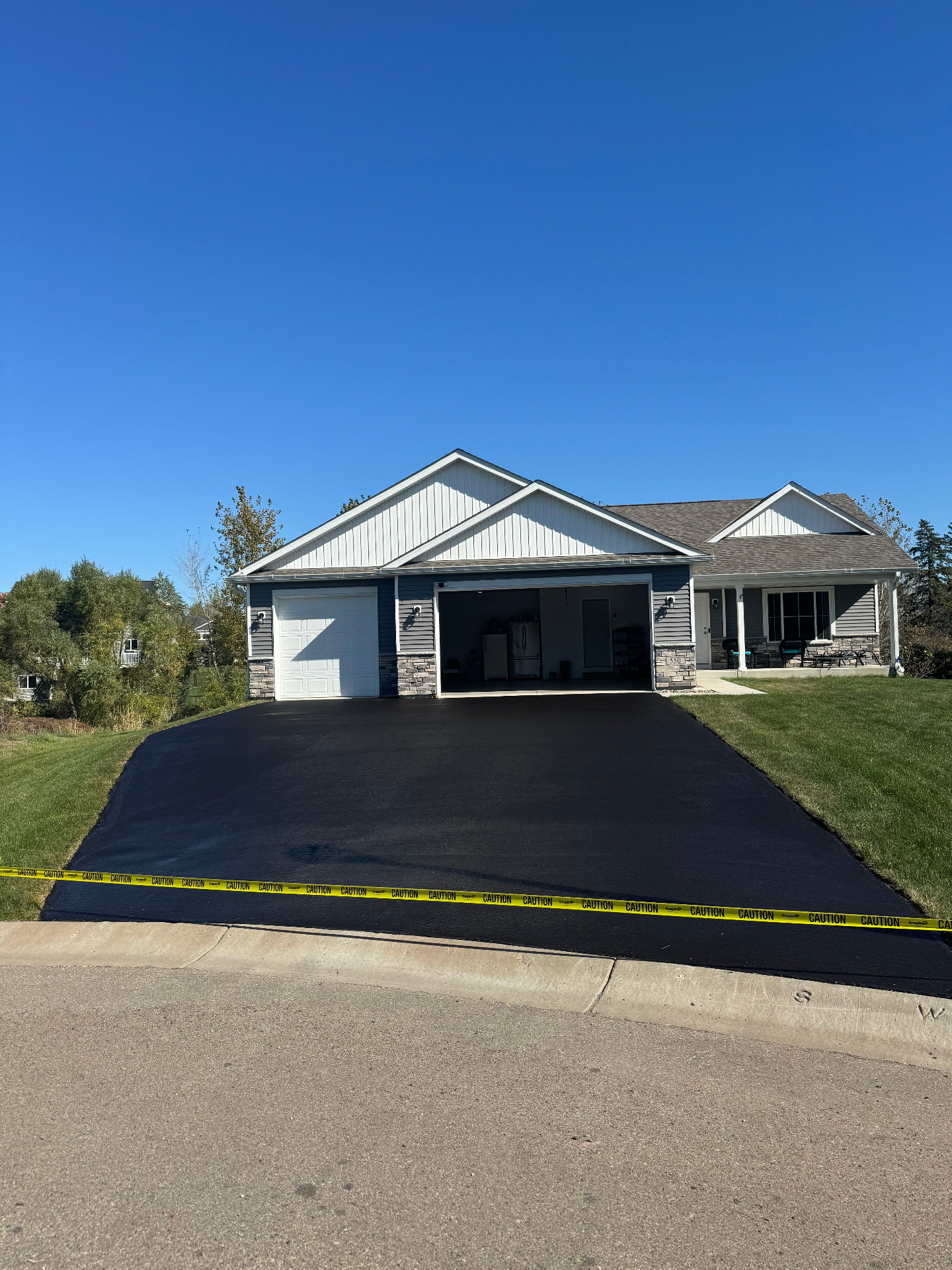
- Sealer application — typically two coats of commercial‑grade asphalt emulsion, applied with squeegee on edges and spray on open areas for full coverage.
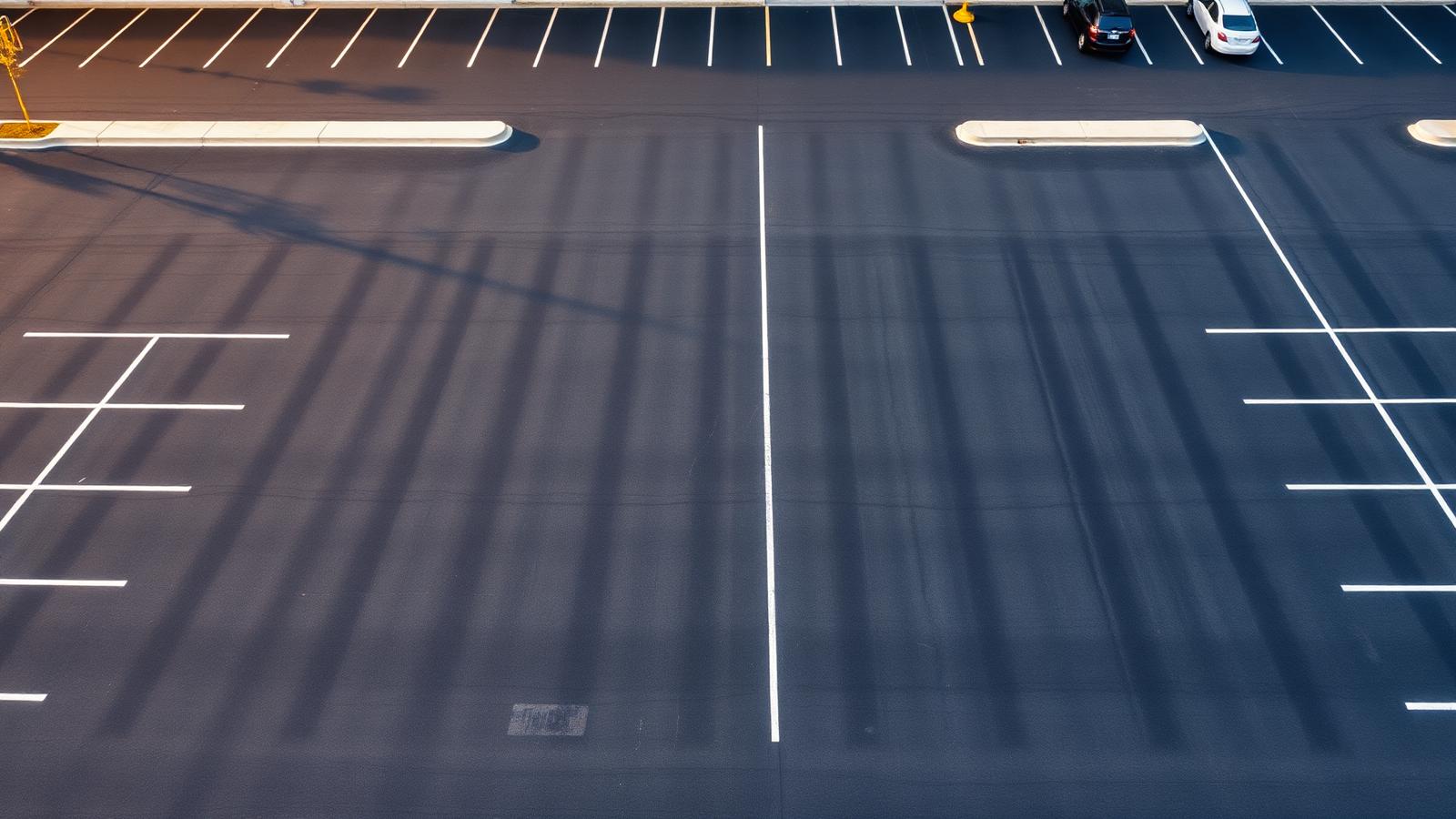
- Restriping — re‑lay parking stalls, fire lanes, directional arrows, ADA stalls, and crosswalks once the sealer has fully cured.
How we schedule around your business
Closing a parking lot for a day is a non‑starter for most properties. We work around that with a few standard approaches:
- Phased lots — split a large lot into 2–4 sections and seal one section at a time so tenants and customers always have access.
- Off‑hours work — overnight or early‑morning starts for retail, restaurants, and medical buildings.
- Weekend cures — Friday‑night sealer can usually be open to traffic by Monday morning under typical Minnesota summer weather.
- Tenant communication — printed door notices and a site map showing which section is closed which day.
Crack filling, patching, and ADA‑compliant restriping
Three sub‑services almost every commercial sealcoat touches:
Crack filling
Hot‑pour rubberized crack fill is the cheapest, highest‑impact thing a property manager can do every year. It keeps water out of the base — which is the #1 cause of parking lot failure in Minnesota. Our deeper dive on this: crack filling vs. replacement.
Patching
Potholes and alligatored sections need to be cut out and replaced — not just filled. Sealer over a failed patch is wasted product. On large lots, we map and price patches by square foot so you can decide what to fix this season vs. next.
Restriping & ADA
Fresh stripes do more for customer perception than almost anything else. We restripe to match your existing layout or update it — and always verify ADA‑accessible stalls meet current federal width and access‑aisle requirements (see the ADA parking guidance).
A maintenance schedule that protects 20+ years of lot life
A well‑built asphalt lot in Minnesota can last 25+ years if it's maintained. The schedule we recommend for most commercial properties:
- Year 1 (new asphalt): no sealer — let it cure 6–12 months. Stripe only.
- Year 2: first seal coat + full restripe.
- Every spring: walk the lot, crack fill, address any potholes.
- Every 2–3 years: fresh seal coat + restripe.
- Year 12–15: consider a mill‑and‑overlay if surface fatigue is widespread.
The lots that get to year 25 are the ones whose owners stuck to that cycle. The lots that get replaced at year 12 are the ones that skipped it.
FAQs
How often should a Minnesota parking lot be seal coated?
Every 2–3 years for most commercial lots. High‑traffic lots (restaurants, grocery, medical) lean toward 2; low‑traffic office or church lots can stretch to 3.
How long does a fresh commercial seal coat last?
A properly prepped two‑coat application typically holds up 2–4 years in Minnesota before it visibly starts to wear. Traffic volume, sun exposure, and how aggressively the lot is plowed all move that window.
Can you do the work overnight to avoid downtime?
Yes — overnight and phased schedules are standard for us on retail and medical properties. We'll build a phasing plan with you before the job starts.
Do you handle striping and ADA stalls too?
Yes. Crack filling, patching, sealer, and full layout striping (including ADA‑compliant stalls and access aisles) are handled in‑house on the same job.
Do you serve property managers across the west metro?
Yes. Prater Companies is based in Watertown, MN and regularly works commercial lots in Mayer, Waconia, Delano, Mound, Maple Plain, and surrounding communities.
Get your lot on a real maintenance plan
If you're a property manager, business owner, or facilities lead and you'd like an honest walk‑through of your lot, we'll come out, mark up what needs attention, and put together a multi‑year plan that protects the asset. Eligible commercial properties also qualify for our current commercial maintenance promotion. Call 763‑234‑7341 or request a free quote. Waconia property managers can start with our Waconia asphalt‑maintenance services page.